Or more things to do when you’re shut inside (mostly) and really just trying to kill time…
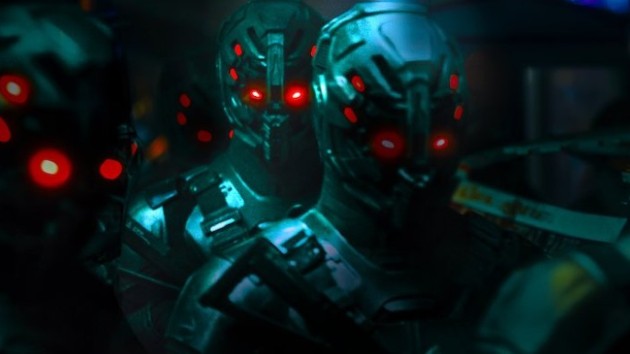
The Neflix original series Altered Carbon has been good, if not great, so far. I realized when I sat down to write this though that I’ve not taken a sufficient amount of time to digest it, but it fits enough into recurrent themes in my head that I thought I should give it mention. It runs a close parallel to Blade Runner in most respects and very thoughtfully examines ideas of not just mortality but what actually constitutes life itself. It does go deeper than Blade Runner, as would be necessary to carry what’s not two full seasons or 18 episodes. Definitely worth consideration unless you’re just plainly not into science fiction.
I’ll go deeper too when I’m not feeling fried. For now, consider that they’ve unlocked the ties between mind and body and consciousness is now (at whatever point in the future this is) portable and transferable. Real death never has to happen if the hard drive can be moved from what organic body (or sleeve) and another. They’ve severed the link between immortality and religion and placed it squarely in the lap of science. The whole affair is really rather clever and they’re not leaving a lot of stones unturned so far (I’m 14 episodes in). There are legal considerations. There are religious considerations. There are moral considerations. All three are played against each other. The writing is pretty deep and dense, even where the acting itself fails (and it really kind of does). I say that almost apologetically because it’s obvious that it’s more direction than talent that’s questionable here. Nearly all the dialogue is delivered in a chesty half-whisper and rather than creating a tone of import or gravity, it’s somewhat tiresome. The entire series is devoid of any kind of balance with lightness. It is entirely humorless. There are situations that might have been humorous, for example a man’s wife is returned to him in the form of a greasy man, or a case of a child’s consciousness being returned to grieving parents in the body of a middle-aged woman. I’m not saying to present it in some campy horror or sci-fi cliche. I’m just saying that the entire tone is heavy. The show may have benefitted from balance.
I digress though. The show is good. It’s solid. There is no disappointment. The subtexts are plentiful and thoughtful, as in the case of an AI who is afraid to reboot to fix glitches because he’s afraid that he will lose data/memories that make him who he “is.” This doesn’t raise any new questions, after all, philosophers and theologists have long argued about what it is that gives us identity. Are we born a complete being that accumulates memories, or are we born empty vessels that fill up with memories and experience that make us who we are? If we clone ourselves and the clones head in separate directions, do they remain identical? And so on… Altered Carbon does directly question and challenge our religious and philosophical groundworks and in that respect its long overdue. It goes beyond what could have been done in a 2 hour movie.
One of my favorite angles so far is a meta-twist where the protagonist changes bodies between Season 1 and Season 2. The demand on the viewers is to let go of the physical image of Season 1 hero and transfer any affinities or biases into an entirely new face (in this case transferring from a white man to a black man which I would guess is intentional). We have to follow him as a person rather than him as in image of a person. It’s a pretty novel idea, excluding the Doctor Who model. Still, every Doctor Who fan has a favorite Doctor Who and my guess is that it has more to do with image than identity.
This definitely demands more of my attention than I can give it in this space right now. Clever stuff though. Truly. People who’ve been following this space may be wondering why I’ve kept this with the COVID label. It’s pretty simple really. World events have forced a lot of people to consider things like their own mortality and circumstances have left people without the patters and routines that they may have previously identified as part of who they are as human beings. It’s brought a lot of questions into play that many folks may not even be able to articulate. People I’ve spoken to have seemed somewhat discombobulated as we sit in our respective sleeves and houses wondering what comes next. It’s pretty certain that it’s going to be permanently life-changing for some people. Of course there are others for whom it really is just only a temporary pause while they wait to go back to business as usual. But some people are going to be irrevocably altered.
Sidenote: Ridley Scott’s Bladerunner permanently altered the visual model of future cities. The cyberpunk model of Hi-Tech/Low-Life prevails in nearly every science fiction show and movie. There are two models now. Some films, if they’re post-apocalyptic, are bleached, ashy and skeletal. Where life remains though is Bladerunner. Almost always dark and raining, lit by neon above and perpetual streams of advertising and glistening steel and class, and abject squalor directly beneath. I’m going to add the Asian angle here too. Post-Bladerunner sci-fi films and shows almost all project the urban future as a dank, overcrowded, Asian slum. Is that racist? I don’t know really.
And a post script: Unrelated, my neighbor this morning during our morning walk (of course safely six feet apart) something I had already noticed. There were fewer ambulances racing by last night than in the last couple nights. Sunday nights are usually pretty busy. Maybe that’s a good sign. Maybe not. Worth mentioning though.
 What rough beast